Kuwaiti Dishes: From Machboos To Hamour
Kuwaiti dishes are a distinct and underappreciated branch of Gulf Arab cuisine, shaped by Bedouin traditions and a deep maritime history. This guide covers the signature dishes, the essential ingredie...
Kuwaiti dishes are a distinct and underappreciated branch of Gulf Arab cuisine, shaped by Bedouin traditions and a deep maritime history. This guide covers the signature dishes, the essential ingredients, and how to cook them at home.
Key Takeaways
- Kuwaiti cuisine is defined by brown rice dishes, slow-cooked meats, and coastal seafood — not the kebab-and-hummus stereotypes of pan-Arab restaurants.
- The national dish, Machboos (Kabsa-style rice), is a spiced rice-and-meat dish that showcases the signature baharat-style spice blend unique to Kuwait.
- Seafood dishes like Mutabbaq Samak and Grouper (Hamour) are staples, reflecting Kuwait's pearl-diving and fishing heritage.
- Kuwaiti cooking uses dried limes (loomi) as a central souring agent, distinguishing it from other Gulf cuisines that lean on tamarind or vinegar.
- Eating Kuwaiti food is a communal experience — dishes are served on a shared platter, traditionally eaten with the right hand.
The Complete Answer: What Defines Kuwaiti Cuisine?
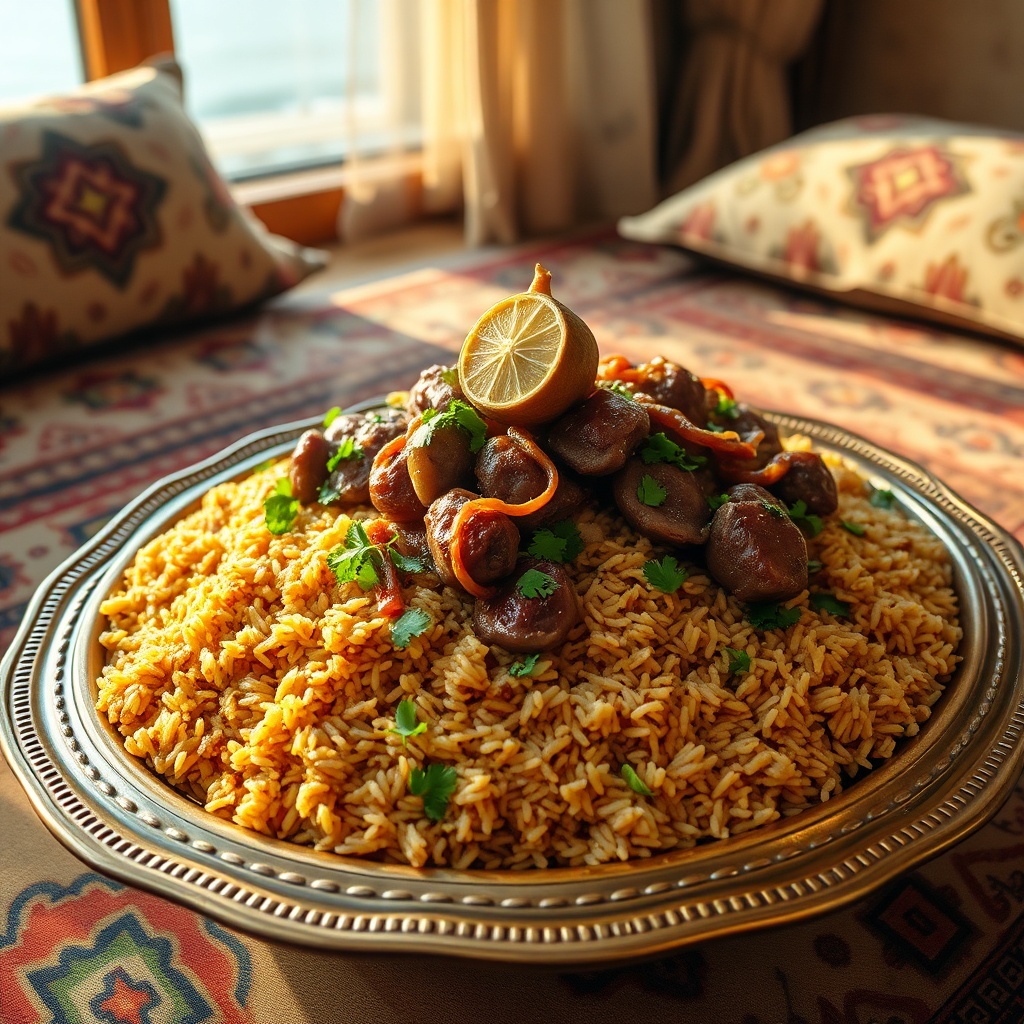
A vivid representation of Kuwait's national dish, showcasing the signature brown rice and slow-cooked meat in a traditional communal setting.
The Core Identity: Rice, Spice, and Sea
Kuwaiti dishes are built on three pillars: a rice base (usually basmati), a spice blend featuring loomi, cardamom, black lime, cinnamon, and cumin, and a protein of lamb, chicken, or fresh fish. This combination creates food that is aromatic, savory, and deeply satisfying.
The cultural context is essential. Kuwait's geography — a narrow strip of desert along the Gulf — produced a cuisine that balances date-palm and camel traditions with an abundance of fish. The sea has always been a source of daily sustenance, not just a luxury.
Quick Answer: Kuwaiti dishes are defined by their use of brown rice, slow-cooked meats, and fresh Gulf seafood, all flavored with a distinctive blend of aromatic spices and dried lime.
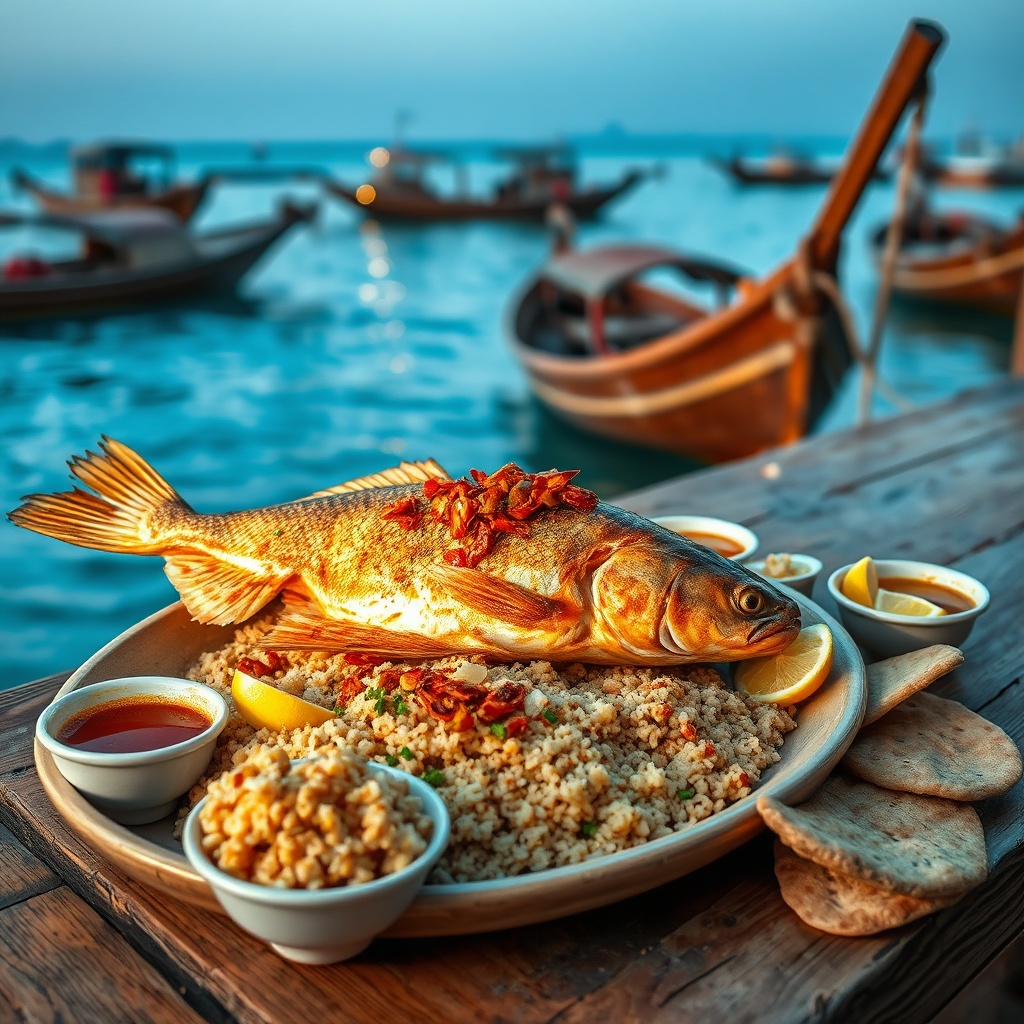
An evocative image of Kuwait's maritime culinary tradition, featuring fresh Gulf fish and spiced rice dishes that reflect the nation's fishing heritage.
How Kuwaiti Dishes Differ From Generic "Middle Eastern" Food
A common misconception is that Gulf food is the same as Levantine food. Kuwaiti dishes are less reliant on grilled meats and flatbreads, and more focused on one-pot rice meals. You won't find the same emphasis on mezze spreads or shawarma; instead, the meal centers on a single, substantial platter.
Another key distinction: Kuwaiti cooking is not spicy in the chili sense. Its heat comes from aromatic spices like cardamom, cinnamon, and black pepper, which provide warmth and depth without the burn of chili peppers.
The Role of Hospitality and Majlis Culture
Kuwaiti dishes are deeply tied to social gatherings. Large platters are meant for sharing, often served in a majlis setting — a traditional seating area for receiving guests. The food is placed in the center, and everyone eats from the same dish.
Hospitality is paramount. Guests are served first, and the host often eats after, ensuring that visitors are well-fed and comfortable. This communal approach is a core part of the food culture.
Definition: A majlis is a traditional gathering space in Gulf homes where guests are received and social events are held. It is the primary setting for sharing Kuwaiti dishes.
The Signature Dishes You Must Know
Machboos: The National Dish
Machboos is the centerpiece of traditional Kuwaiti cuisine. It is a spiced rice dish cooked with chicken, lamb, or fish, and garnished with fried onions and dried limes. The rice absorbs the rich, aromatic broth, resulting in a dish that is both comforting and complex.
There are several variations, each named for its protein: - Machboos Dajaj (chicken) — the most common version.
- Machboos Laham (lamb) — richer and more robust.
- Machboos Samak (fish) — a coastal specialty.
A regional distinction sets Kuwaiti machboos apart: it is often lighter on tomato than Yemeni or Saudi versions, allowing the spice blend and loomi to take center stage.
Mutabbaq Samak: The Fish Dish
Mutabbaq Samak is a beloved Kuwaiti seafood dish, usually made with grouper (hamour) or sea bream (sobaity). The fish is typically baked or grilled and served alongside a spiced rice bed, or stuffed with a seasoned rice mixture.
The flavor profile is distinctively Kuwaiti, thanks to the generous use of loomi and garlic. The dried lime imparts a smoky sourness that cuts through the richness of the fish, while garlic adds a sharp, savory note.
Other Essential Dishes: Gers Ogaily, Margoog, and Darabeel
Beyond machboos and fish, several other dishes complete the picture of Kuwaiti food culture:
- Gers Ogaily — a sweet saffron-and-cardamom rice dessert, often served during Ramadan. It is a delicate, fragrant pudding that showcases the region's love for aromatic sweets.
- Margoog — a hearty stew of meat, vegetables, and thin dough strips. It is similar to a savory dumpling soup and is a comforting, filling dish for cooler evenings.
- Darabeel — a sweet porridge made with wheat, dates, and cardamom. It is traditionally served at celebrations and is prized for its rich, comforting texture.
The Flavor Profile: Ingredients That Make Kuwaiti Food Distinct
The Spice Rack: Loomi, Cardamom, and Cinnamon
The dried lime (loomi) is the single most defining ingredient in Kuwaiti dishes. It is a whole lime that has been boiled and sun-dried until blackened. When added to a pot, it releases a sour, smoky depth that cannot be replicated by lemon juice or vinegar.
The Kuwaiti spice blend — often called "Kuwaiti baharat" or "machboos spice" — typically includes cardamom, cinnamon, cloves, black pepper, and cumin. The exact ratios vary by family, but the result is always a warm, aromatic profile that is more floral than hot.
Definition: Loomi is a dried lime used as a souring agent in Gulf cooking. It adds a unique smoky, citrusy flavor that is essential to authentic Kuwaiti dishes.
The Staples: Rice, Dates, and Ghee
Kuwaiti dishes rely on long-grain basmati rice — never short-grain or sticky rice. The grains must remain separate and fluffy after cooking, which is a hallmark of proper preparation.
Dates are a staple both as a sweetener and as a side dish, often served with tea or coffee. Ghee (samma) is used instead of butter or vegetable oil, providing a rich, nutty flavor that is essential to the cuisine.
The Local Ingredients: Seafood and Fresh Produce
Fresh Gulf fish — including hamour, sobaity, and safi — are central to Kuwaiti cooking. The Kuwaiti fish market culture means the day's catch often determines what's on the table, with fish being a daily staple rather than a special occasion food.
Kuwaiti Dishes vs Other Gulf Cuisines: A Comparison
Kuwaiti vs Saudi (Kabsa) vs Emirati (Machboos)
While all three cuisines share a love for spiced rice, they have distinct identities. Kuwaiti dishes use more loomi and cardamom, creating a sour, aromatic profile. Saudi kabsa relies more on tomato and dried lemon, making it richer and more robust. Emirati machboos is often sweeter, with saffron playing a prominent role.
The cooking methods also differ. Kuwaiti dishes are more likely to be steamed or baked after an initial searing, whereas Saudi kabsa often uses a layered boiling technique.
Comparison Table: Kuwaiti, Saudi, Emirati, and Bahraini Rice Dishes
| Feature | Kuwaiti Machboos | Saudi Kabsa | Emirati Machboos | Bahraini Machboos |
|---|---|---|---|---|
| Primary Sour Agent | Dried lime (loomi) | Dried lemon | Dried lime + tamarind | Dried lime + tomato |
| Spice Profile | Cardamom-forward, aromatic | Cinnamon & clove heavy | Sweeter, saffron prominent | Tomato-forward, robust |
| Common Protein | Chicken, lamb, fish | Chicken, lamb, camel | Chicken, lamb, fish | Chicken, fish, lamb |
| Rice Style | Basmati, separate grains | Basmati, often mixed | Basmati, fragrant | Basmati, slightly sticky |
| Signature Garnish | Fried onions, loomi | Fried almonds, raisins | Saffron, fried onions | Fried onions, tomato slices |
What Makes Kuwaiti Cuisine Unique?
Three differentiators stand out: the heavy use of loomi, the focus on steaming rather than grilling, and the fish-forward approach compared to other Gulf countries. Kuwait's pearl-diving heritage created a cuisine that prioritizes seafood as a daily staple, not just a luxury. This history is baked into every dish, from humble fish stews to elaborate machboos.
Quick Answer: Kuwaiti dishes are unique among Gulf cuisines for their heavy use of dried lime (loomi), their focus on steaming rather than grilling, and their strong emphasis on fresh seafood.
How to Cook Kuwaiti Dishes at Home: A Practical Guide
Step-by-Step: Making Authentic Kuwaiti Machboos
- Prepare the spice blend — combine cardamom, cinnamon, cloves, black pepper, cumin, and dried lime (loomi) in a spice grinder. The exact ratios can be adjusted to taste, but loomi should be prominent.
- Sauté the aromatics — heat ghee in a heavy pot, then add diced onions and cook until golden brown. This forms the flavor base.
- Add the meat — sear chicken or lamb pieces until browned on all sides, then add the spice blend and stir to coat the meat evenly.
- Add the liquid — pour in water or stock, add whole loomi, and bring to a gentle simmer. Cook until the meat is tender, which may take 30-45 minutes.
- Add the rice — stir in rinsed basmati rice, ensuring it's fully coated with the spiced broth. Cover and cook on low heat until the rice absorbs all the liquid.
- Steam and rest — turn off the heat and let the pot rest, covered, for 10-15 minutes. This final steam is critical for the rice to finish cooking properly.
- Serve and garnish — top with fried onions, fresh cilantro, and a side of tomato salsa (daqqus).
Common Mistakes to Avoid When Cooking Kuwaiti Dishes
- Overcooking the rice — Kuwaiti rice should be separate and fluffy, not mushy. Watch the liquid ratio carefully.
- Skipping the loomi — substituting with lemon juice or vinegar changes the flavor profile entirely. Loomi is essential.
- Using the wrong rice — short-grain or pre-cooked rice will not work; use high-quality basmati.
- Not resting the dish — the final steam/rest is critical for the rice to finish cooking properly. Do not skip it.
Tips for Adapting Kuwaiti Recipes (Vegetarian, Gluten-Free, etc.)
A vegetarian machboos can be made by substituting meat with mushrooms or chickpeas, which absorb the spiced broth beautifully. Most Kuwaiti dishes are naturally gluten-free since they rely on rice rather than wheat-based breads. This makes the cuisine accessible to those with dietary restrictions.
Where to Eat Kuwaiti Dishes: A Guide for Visitors and Locals
In Kuwait City: From Traditional Restaurants to Home Kitchens
Kuwaiti dishes are served in a variety of venues, from traditional restaurants to hotel buffets. However, home-cooked meals are the most authentic experience. Kuwaiti families are the true custodians of the cuisine, and restaurants often serve a simplified version to accommodate a wider audience.
Quick Answer: The most authentic Kuwaiti dishes are found in home kitchens, where families uphold traditional recipes. Restaurants in Kuwait City offer a more accessible, often simplified, version of the cuisine.
The Experience: How Kuwaiti Dishes Are Served and Eaten
The serving style is communal. A large platter of machboos is placed in the center of the table, and everyone eats from the same dish. The traditional eating method uses the right hand to roll rice and meat into small balls, which is both practical and social.
There's also an etiquette to the meal: it's customary to start with the dish's best part — often the meat — and to leave a little rice as a sign of satisfaction. This reflects the importance of hospitality and respect for the host.
Bringing Kuwaiti Food Home: Shopping for Ingredients
To cook Kuwaiti dishes at home, you'll need a few key ingredients: loomi (dried limes), a Kuwaiti spice blend, basmati rice, ghee, and fresh Gulf fish if you're making a seafood dish. These can be found at specialty spice shops, Middle Eastern grocers, or online retailers.
FAQ
What is the national dish of Kuwait?
Machboos is widely considered the national dish of Kuwait. It's a spiced rice dish cooked with chicken, lamb, or fish, and flavored with dried lime (loomi), cardamom, and other aromatic spices.
Is Kuwaiti food the same as other Gulf cuisine?
No. While Kuwaiti dishes share similarities with Saudi kabsa and Emirati machboos, they are distinguished by a heavier use of dried lime (loomi), a more cardamom-forward spice profile, and a stronger focus on seafood due to Kuwait's coastal heritage.
What is loomi and why is it used in Kuwaiti cooking?
Loomi (dried lime) is a whole lime that has been boiled and sun-dried until blackened. It adds a distinctive sour, smoky flavor to Kuwaiti dishes and is the single most defining ingredient in the cuisine.
Is Kuwaiti food spicy?
No, Kuwaiti food is not spicy in the chili sense. Its heat comes from aromatic spices like cardamom, cinnamon, and black pepper, which provide warmth and depth without heat.
What are some common Kuwaiti dishes I can try?
The most essential Kuwaiti dishes are Kuwaiti dishes like Machboos (spiced rice with meat or fish), Mutabbaq Samak (fish with spiced rice), Margoog (meat and vegetable stew with dough strips), and Gers Ogaily (saffron rice pudding).
Conclusion
Kuwaiti dishes are a distinct, underrated culinary tradition — defined by the interplay of aromatic spices, dried lime, and fresh Gulf seafood. Whether you're cooking machboos at home or visiting Kuwait to experience the communal dining culture, the cuisine offers a depth of flavor that rewards curiosity. Try at least one signature dish and seek out authentic recipes rather than generic interpretations. Your first taste of a properly made machboos will reveal why this cuisine deserves a place on the global stage.
Related Articles
Kuwait City Desert Day Trip: Tour Vs Self-Drive
A Kuwait City desert day trip is a guided or self-driven excursion into the surrounding dunes that combines off-road adventure, cultural experiences, and the raw landscape of the Arabian Peninsula — t...
Kuwaiti Culture: From Majlis To Modernity
<a href="https://kenzadi.com/">Kuwaiti culture</a> is a distinctive blend of deep-rooted Bedouin traditions, Islamic values, and a cosmopolitan outlook shaped by centuries of maritime trade and oil-er...
Kuwait City Vs Dubai: Which City Fits You Best?
Introduction...