Kuwait City Vs Dubai: Which City Fits You Best?
Introduction...
Introduction
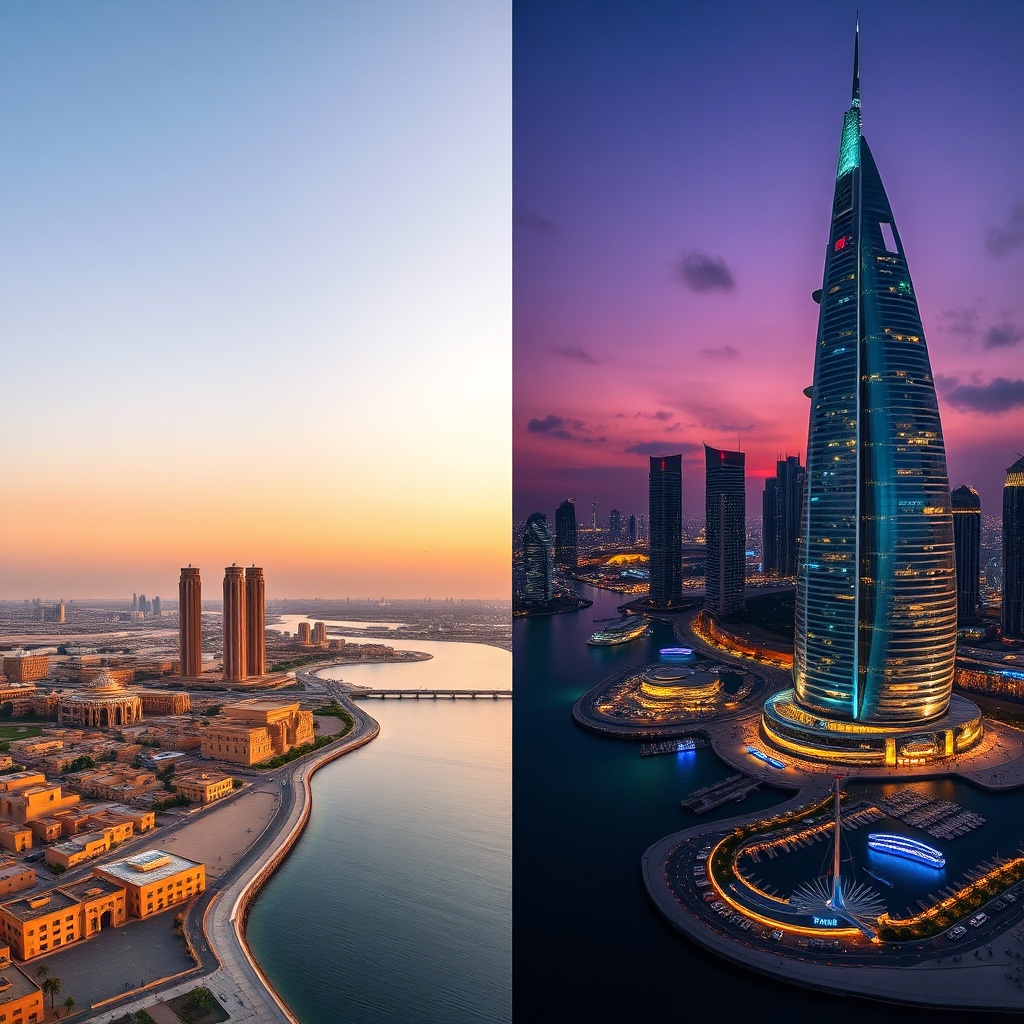
Kuwait City vs Dubai is one of the most common comparisons expats make when weighing a move to the Gulf. The two cities sit less than 1,000 kilometres apart, but they feel like different worlds. Kuwait City is a national capital with deep-rooted traditions and a government-driven economy. Dubai is a global hub built on trade, tourism, and spectacle.
This article gives you a clear, side-by-side comparison to help you decide which city fits your priorities — without relying on generic "pros and cons" lists. The aim is to show you how each city actually works day to day, so you can make a decision based on your own career stage, family situation, and tolerance for heat, traffic, and bureaucracy.
Key Takeaways
- Kuwait City offers a slower, more family-oriented lifestyle with a strong local culture, while Dubai delivers a fast-paced, cosmopolitan experience with year-round events. For example, Dubai hosts over 200 major events annually, while Kuwait City's social calendar is far quieter.
- The cost of living in Dubai is generally higher in terms of rent, but Kuwait City can surprise you with higher costs for certain goods and services — always check current prices before moving. Average rent for a one-bedroom apartment in Dubai is around AED 5,500 per month, compared to KD 350 (approx. AED 4,200) in Kuwait City.
- Dubai has a more mature expat infrastructure, from visa options to community services, making it easier for newcomers to settle in.
- Kuwait City is more affordable for some categories (like fuel and certain utilities), but its entertainment and dining scenes are far more limited. Petrol costs around 0.10 KD per litre in Kuwait versus AED 2.50 per litre in Dubai.
- Your choice depends heavily on your career stage, family status, and tolerance for heat, traffic, and bureaucracy.
The Complete Answer: Kuwait City vs Dubai — Which One Is Right for You?
A dramatic side-by-side aerial view of Kuwait City's traditional skyline and Dubai's modern, illuminated towers.
Definition: Kuwait City is the political and administrative capital of Kuwait, known for its conservative culture, government-driven economy, and strong national identity. Dubai is a city in the UAE, a free-market-driven global business and tourism hub with a highly diverse expat majority.
The definitive answer is straightforward. If you value career velocity, variety, and a seamless expat life, Dubai is the clear winner. If you prioritise a quieter, more grounded, culturally authentic life with a smaller, tighter community, Kuwait City deserves a serious look.
Quick Answer: Dubai is the better fit if you want a fast-paced, diverse expat life with strong career momentum. Kuwait City is the better fit if you want a quieter, more culturally grounded life with a smaller community and a slower rhythm.
| Factor | Kuwait City | Dubai |
|---|---|---|
| Primary economic driver | Oil, government, public sector | Trade, tourism, finance, real estate |
| Typical workweek | Sunday–Thursday, with a Friday–Saturday weekend | Monday–Friday, with a Saturday–Sunday weekend and a shorter Friday |
| Visa/residency ease | Employer-dependent, stricter, less predictable | More accessible, with clearer long-term options |
| Entertainment variety | Limited, home-based social culture | Extensive, year-round events and nightlife |
| Overall pace | Slower, more traditional | Fast, global, constantly changing |
The two cities are not interchangeable. They solve different problems for different people, and the right choice depends on what you're actually looking for.
Cost of Living & Money: The Real Budget Breakdown
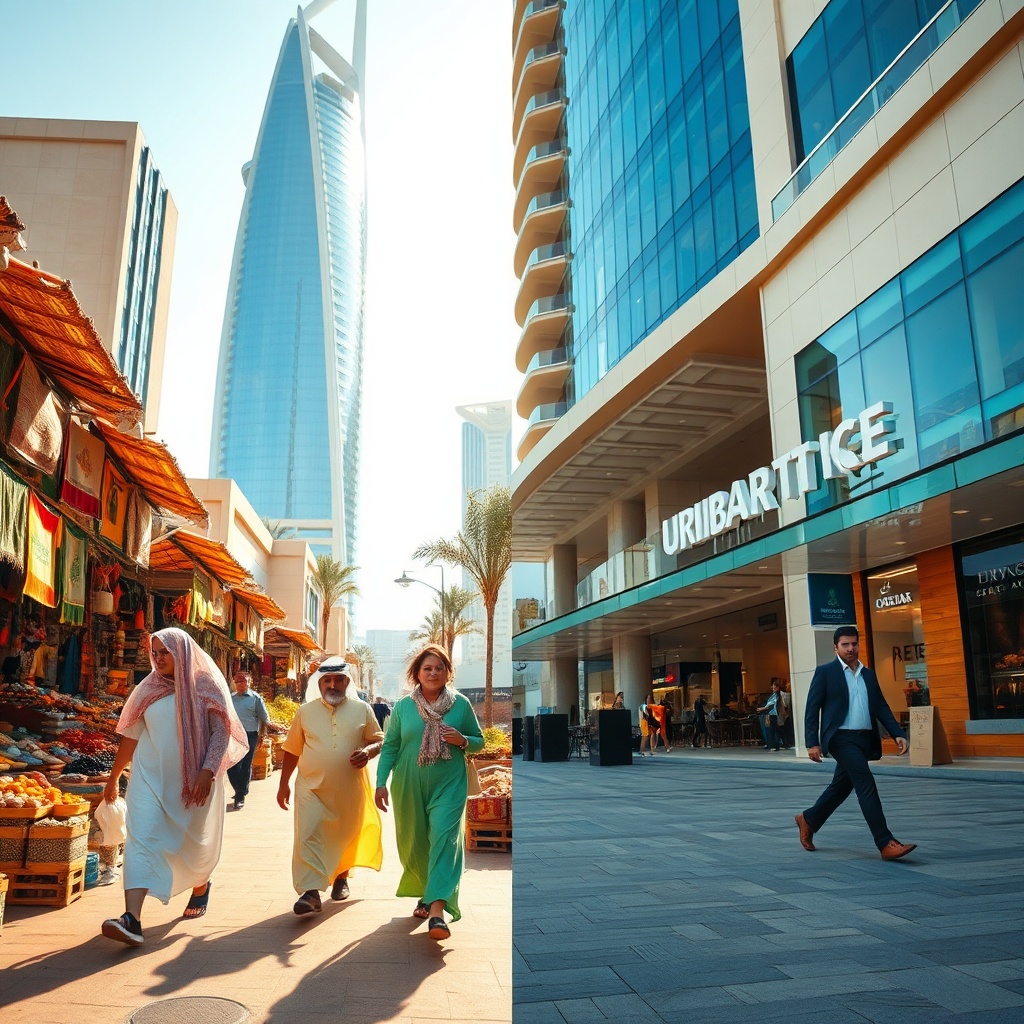
A vivid street-level split scene showing the traditional, family-oriented atmosphere of Kuwait City alongside the modern, fast-paced energy of Dubai.
Housing Costs: Where Your Money Goes
In Kuwait City, housing is often structured around employer-provided housing allowances. Many expats receive a separate allowance on top of their salary, which can cover a significant portion of rent. In Dubai, the rental market is more fluid and prices vary widely by district — from budget-friendly areas like Deira to ultra-luxury communities like Palm Jumeirah. You pay for the location, the building, and the amenities. Always check current listings, as rents in both cities have shifted in recent years. For example, a two-bedroom apartment in a mid-range Kuwait City area like Salmiya rents for around KD 400–600 per month (approx. USD 1,300–2,000), while a comparable apartment in Dubai Marina costs AED 8,000–12,000 per month.
Daily Expenses: Groceries, Transport, and Eating Out
The everyday costs that actually affect your monthly budget differ in surprising ways. Fuel is notably cheaper in Kuwait, given its oil-producing status, and some utilities are subsidised. However, imported groceries, electronics, and restaurant meals can be expensive because of limited competition and import duties. In Dubai, you'll find a much wider range of price points — from cheap eateries to fine dining — and a more competitive retail market. The bottom line is that you can't assume one city is cheaper across the board. To put it in numbers: petrol in Kuwait costs around 0.10 KD per litre, while in Dubai it is about AED 2.50 per litre. A meal at a mid-range restaurant in Kuwait City costs around KD 5–8, compared to AED 60–100 in Dubai.
Hidden Costs: Visas, Fees, and the Things Nobody Tells You
Beyond rent and groceries, both cities have hidden costs. In Dubai, visa renewal fees, health insurance requirements, and municipal charges add up. In Kuwait, residency permits are tied to your employer, and the associated fees and paperwork are usually handled by the company — but that also means you're dependent on your employer for your legal status. Car insurance, school deposits, and cultural costs like dress-code purchases can surprise newcomers in both cities. Always budget for these before you move. In Dubai, visa renewal fees start at around AED 1,000 per year, and mandatory health insurance costs AED 3,000–5,000 annually. In Kuwait, employer-sponsored residency permits typically cost KD 100–200, but the company covers the fees.
Quick Answer: Is Kuwait City cheaper to live in than Dubai? Not necessarily. Fuel and some utilities are cheaper, but housing, imported goods, and dining can be comparable or even higher. The real answer depends on your lifestyle, family size, and where you choose to live.
Career & Business Opportunities: Which City Matches Your Ambition?
The Job Market: Where the Opportunities Actually Are
Dubai offers a far broader private-sector market, with opportunities in finance, tech, hospitality, logistics, and real estate. It's a place where you can change jobs frequently and climb quickly. Kuwait City is dominated by government and oil-related roles. The public sector is the largest employer, and many expat roles are tied to specific projects or contracts. If your industry is energy, infrastructure, or public administration, Kuwait City may have a niche for you. If you're in tech, consulting, or finance, Dubai is the stronger bet. In Dubai's tech sector, entry-level salaries start at AED 8,000–12,000 per month, while mid-level roles reach AED 20,000–30,000. In Kuwait's oil sector, typical expat salaries range from KD 1,500–3,000 per month, plus housing allowances.
Quick Answer: Which city is better for expat career growth? Dubai generally offers a more diverse job market and faster progression, especially in private-sector industries. Kuwait City is more suited to government, oil, and public-sector roles.
Entrepreneurship and Business Setup
Dubai has a mature free-zone ecosystem that makes business setup relatively straightforward. You can own 100% of your company in most free zones, with simplified licensing and tax advantages. Kuwait City has a more restrictive model, typically requiring a local partner or sponsor for many business activities. The process is slower and less transparent, and the legal framework is less accommodating to foreign entrepreneurs. Company setup in Dubai free zones costs between AED 15,000 and AED 50,000 depending on the licence, and you can own 100% of your business.
Definition: A free zone is a designated area in the UAE where businesses enjoy 100% foreign ownership, simplified licensing, and often tax exemptions, making it a popular route for expat entrepreneurs.
Career Progression and Long-Term Earning Potential
Dubai rewards mobility. Job-hopping is common, and salary increases often come from moving between companies. Kuwait City rewards tenure. Many expats stay with the same employer for years, building long-term relationships and benefits like housing allowances and annual flights. Neither model is inherently better — it depends on whether you prefer frequent moves or long-term stability. Average salary increases from switching jobs in Dubai range from 15–30%, compared to a typical 3–5% annual increment in Kuwait City.
Lifestyle, Culture & Social Scene: The Expat Experience
Social Life and Making Friends
Dubai has countless events, clubs, and interest groups. You can find a community for almost any hobby within weeks of arriving. Kuwait City requires more effort. The expat community is smaller and more dispersed, so you often need to be proactive. But the friendships you build tend to be deeper and more lasting, because the social circle is tighter and people rely on each other more. Dubai's expat population is estimated at around 3 million, while Kuwait City's is closer to 1.5 million.
Family Life, Schools, and Activities for Children
For families, the cultural environment shapes childhood in different ways. Kuwait City offers a quieter, more family-oriented atmosphere with strong community ties. Dubai offers a wider range of international schools, more structured weekend activities, and a more developed healthcare sector. However, the cost of raising a family in Dubai tends to be higher, especially when you factor in school fees and the constant pressure to keep up with a fast-paced social scene. International school fees in Dubai average AED 30,000–80,000 per year, while in Kuwait City they range from KD 2,000–5,000 per year.
Dining, Entertainment, and Weekend Escapes
The entertainment gap is huge. Dubai is a non-stop entertainment destination — from theme parks and beach clubs to concerts, brunches, and desert safaris. Kuwait City is much quieter, with a more home-based social culture. Dining out exists but is less varied, and there's no real nightlife scene in the same way. Weekend escapes also differ: Dubai offers easy access to Oman and other Emirates, while Kuwait City has fewer nearby getaways. Dubai has over 50 shopping malls and 30+ beach clubs, while Kuwait City has fewer than 10 major malls and no dedicated nightlife district.
Infrastructure, Commuting & Urban Living: The Day-to-Day Reality
Traffic and Commute Times
Both cities struggle with traffic, but the nature of the problem differs. Kuwait City has a sprawling road system with limited public transport, so almost everyone drives. Congestion can be severe during peak hours, and there are few alternatives. Dubai has a metro system that takes some cars off the road, but major highways still face gridlock, especially during rush hour. The commute experience in Dubai is more varied — you can choose to drive, take the metro, or use ride-hailing. Average commute times in Kuwait City can exceed 45 minutes each way, while Dubai's metro cuts average commutes to around 30 minutes.
Public Transport and Getting Around Without a Car
Dubai is far ahead with a functional metro, a comprehensive bus network, and regulated ride-hailing services. You can live in Dubai without a car, though it's easier in certain districts. Kuwait City relies almost entirely on private cars and taxis. Public transport is limited, and the city is designed around car ownership. If you don't want to drive, Kuwait City will be a challenge.
Climate, Air Quality, and Living Comfort
Both cities are extremely hot in summer, with temperatures frequently exceeding 40°C. There are differences in humidity and dust, and urban design plays a big role in how comfortable you feel. Dubai has invested heavily in air-conditioned spaces, indoor attractions, and shaded walkways. Kuwait City's urban design is more car-centric, so you're often exposed to the heat when moving between buildings. Air quality can be affected by dust storms in both cities. In July, Dubai's average high is 41°C, while Kuwait City's is 45°C.
Long-Term Outlook: Residency, Family, and Future Planning
Residency, Visas, and the Path to Citizenship
Dubai offers clearer, more accessible long-term residency options, including the golden visa for investors, professionals, and talented individuals. Kuwait City has stricter, employer-dependent residency rules. Your residency in Kuwait is tied to your employment, and leaving your job typically means leaving the country unless you secure another sponsor. This makes Kuwait City less attractive for those who want long-term flexibility.
Cost of Raising a Family Over Time
For families, the long-term financial picture differs. Kuwait City offers lower costs in some areas, but international school fees and healthcare options are more limited. Dubai has more choices for schools and healthcare, but you pay a premium. Over time, the cost of keeping kids entertained in Dubai — with all its activities and attractions — can add up. In Kuwait City, the quieter lifestyle may actually save you money on entertainment.
Step-by-Step: How to Choose Between Kuwait City and Dubai
This is a practical process to help you weigh your priorities. Follow these steps:
- List your top three non-negotiable priorities (e.g., salary, family life, entertainment).
- Score each city from 1 to 10 on each priority — use data you have verified, not assumptions.
- Research your specific industry's job market in both cities.
- Calculate a realistic monthly budget for both cities using current, verified cost-of-living data.
- Consider your family status and the educational/healthcare needs of your dependents.
- Visit both cities for at least a week, if possible, to experience the atmosphere firsthand.
- Make a provisional decision, then test it against a worst-case scenario (e.g., job loss, visa issues).
Related reading: Kuwait City: The Ultimate Travel Guide for 2026 · Kuwait Visa Requirements 2026: What’s New
FAQ
Is Kuwait City cheaper to live in than Dubai? Not necessarily. While some costs like fuel and certain utilities are lower, housing and imported goods can be comparable or even higher. The answer depends on your lifestyle and family size.
Which city is better for expat career growth? Dubai generally offers a more diverse job market and faster career progression, especially in private-sector industries like finance, tech, and hospitality. Kuwait City is more suited to government, oil, and public-sector roles.
Can I live in Kuwait City without a car? It is very difficult. The city has limited public transport and is designed around car ownership. Dubai, with its metro and regulated ride-hailing, is more feasible for car-free living.
Is the culture in Kuwait City more conservative than in Dubai? Yes. Kuwait City is more socially conservative, with stricter norms around dress, alcohol, and public behaviour. Dubai is far more liberal and tolerant of diverse lifestyles.
Which city is better for raising a family? It depends on your priorities. Kuwait City offers a quieter, more family-oriented environment with strong community ties. Dubai offers better schools, more activities, and a more developed healthcare sector, but at a higher cost.
Conclusion
The core difference is simple: Dubai is a global city that rewards ambition and variety; Kuwait City is a national capital that rewards stability and community. Neither city is objectively better — the right choice depends on your career stage, family situation, and tolerance for heat, traffic, and cultural constraints. Dubai offers a fast-paced global lifestyle with abundant career opportunities, but at a premium cost. Kuwait City offers stability, community, and a quieter pace, yet demands adaptation to a more conservative culture and limited entertainment options. Both cities have trade-offs in housing, education, healthcare, and entertainment. Don't rely on assumptions — use the step-by-step framework to gather verified, current data. If you're leaning toward Dubai, start researching free zones and job markets. If Kuwait City appeals to you, connect with expats already living there. Take the next step today: visit both cities, run the numbers, and choose the city that fits your life now — and in five years.
Related Articles
Kuwait City Desert Day Trip: Tour Vs Self-Drive
A Kuwait City desert day trip is a guided or self-driven excursion into the surrounding dunes that combines off-road adventure, cultural experiences, and the raw landscape of the Arabian Peninsula — t...
Kuwaiti Culture: From Majlis To Modernity
<a href="https://kenzadi.com/">Kuwaiti culture</a> is a distinctive blend of deep-rooted Bedouin traditions, Islamic values, and a cosmopolitan outlook shaped by centuries of maritime trade and oil-er...
Kuwait Cultural Evolution: From Bedouin To Modern
<a href="https://kenzadi.com/">Kuwait cultural evolution</a> is a story of adaptation — a small nation that transformed from a maritime trading hub and Bedouin desert society into a <a href="https://v...